The current healthcare environment requires organizations to share data between multiple systems and platforms because this capability has become an essential requirement for their operations. The problem of getting healthcare data to work together stems from multiple issues, which include the existence of separate systems, together with isolated data storage and the absence of consistent data formatting standards. The importance of AI technology lies in its ability to perform essential functions. AI-driven automation now operates as a revolutionary technology that enables businesses to achieve their desired results through healthcare data interoperability.
The healthcare system manages extensive digital data, which comprises patient information, medical imaging documents, clinical records, and prescription information. The establishment of a unified data system through the successful integration of various data sources leads to better patient care results, decreased administrative tasks, and enhanced operational performance. Healthcare chains construct a complete data ecosystem through their AI automation systems, which enable secure data sharing between various operational systems.
The blog post demonstrates how AI automation improves healthcare operations by creating data interoperability between different health systems. The article explains how essential technology components enable system information exchange while describing current operational difficulties and the necessary technology implementation, which will enhance healthcare system performance and improve patient care delivery.
What Is AI Automation for Healthcare Data Interoperability?
The term “AI automation for healthcare data interoperability” refers to the use of AI technologies to automate, enhance, and streamline healthcare data transfers between disparate systems. The process involves integrating various healthcare platforms, such as EHR (electronic health records). Health Information Exchanges (HIEs), patient management systems, and medical imaging systems are all in a centralized network.
The primary object of AI automation in this situation is to eliminate data silos and provide continuous access to all relevant information intended for clinicians, medical staff members, patients, and administrators. Through this process, AI establishes a new collaboration system that filters through healthcare data to produce better medical decisions.
Healthcare systems use three key AI automation methods to ensure different data systems can work together. Natural language processing (NLP) is used to get information from unstructured text, machine learning algorithms are used to guess what will happen to a patient based on past data, and robotic process automation (RPA) is used to handle routine tasks like checking and entering data.
Why AI-Powered Data Interoperability Is Crucial for Healthcare
We cannot overstate the need for AI-powered data interoperability in healthcare. Eventually, these systems have faced issues with disconnected data, leading to operational problems and communication breakdowns that result in costly mistakes. As per the recent research by the National Institutes of Health (NIH), healthcare providers face their biggest obstacle in delivering exceptional patient care, as more than 70 percent of them experience problems accessing patient data, which they need for their work.
Therefore, the AI in healthcare data integration solves these problems by enabling healthcare systems to effectively exchange data at the same time. Healthcare professionals can make better decisions because they have access to both clinical and administrative financial data through direct system integration. Also, this technological framework enables healthcare institutions to use predictive analytics, which helps them forecast patient preferences and create effective treatment strategies while minimizing the chances of negative medical outcomes.
It is ideal to explore extensive data collections from multiple data sources, which helps them recognize patterns and trends that support their clinical decision-making. By looking at a patient’s medical history, artificial intelligence can find patients who need immediate medical care and let doctors know about possible drug interactions.
The AI-powered systems combine clinical advantages with operational benefits by improving healthcare administration through better billing procedures, scheduling methods, and insurance verification processes, which enable healthcare providers to operate their facilities more effectively.
Key Features of an Effective AI-Powered Interoperability Platform
The foundation of successful healthcare data integration operations requires an AI-powered The platform must include several essential functions that allow users to exchange data and communicate effectively with one another. another.
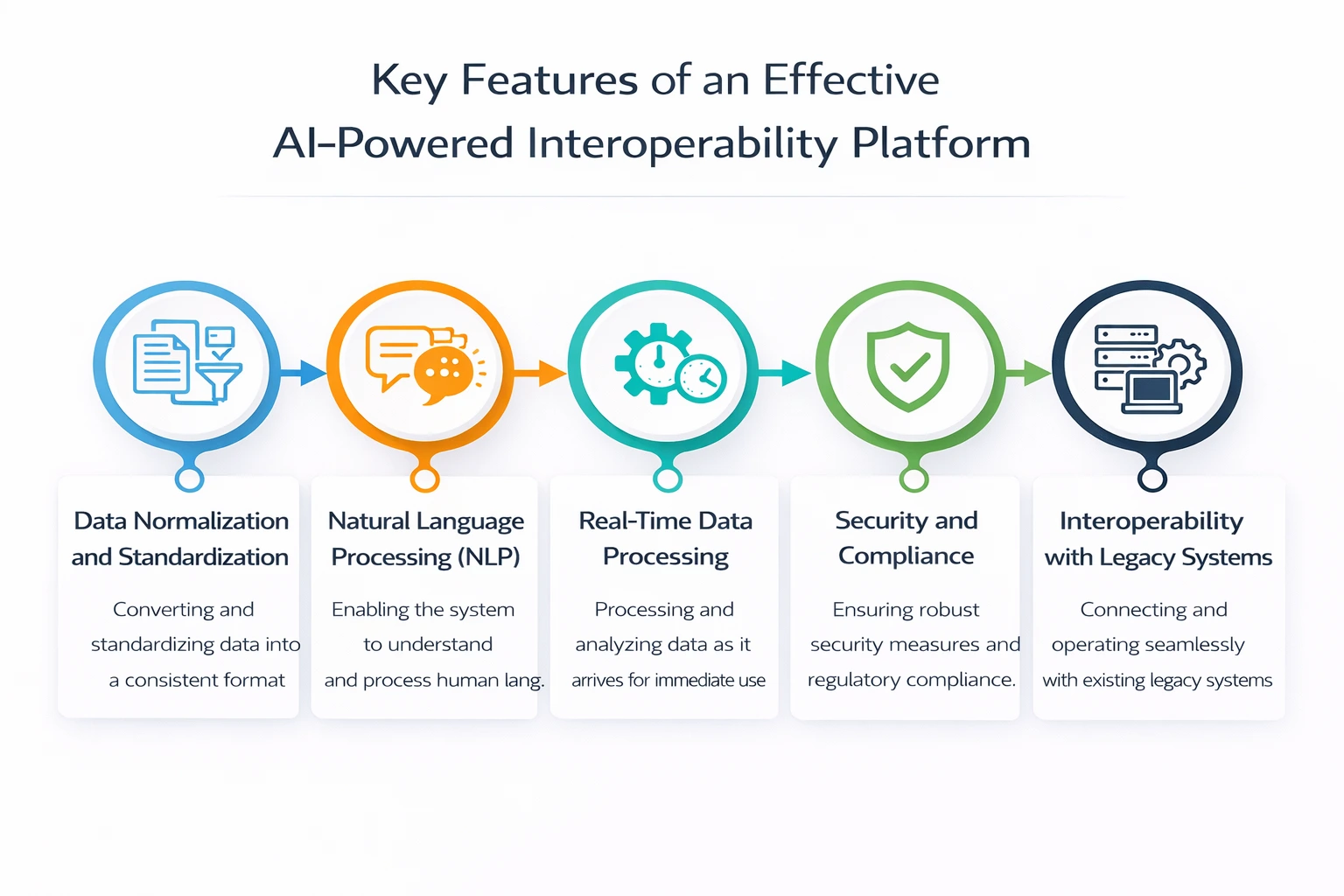
Data Normalization and Standardization
Healthcare systems operate with distinct data storage conventions that define specific storage formats and standard operating procedures. AI-powered platforms can automatically standardize and normalize data from different sources, which enables systems to achieve interoperability. The system needs to collect different data types from multiple medical facilities, pharmacies and testing centers to create a comprehensive patient medical record.
Natural Language Processing (NLP)
Healthcare data interoperability experiences its primary obstacle because unstructured data sources, including clinical notes and medical images, make it difficult to derive valuable insights from them. The system uses NLP as an AI technology, which enables it to read and interpret unstructured data before transforming it into structured information that can be shared across different platforms.
Real-Time Data Processing
AI can handle extensive healthcare data processing during real-time operations, which enables instant access to vital information. The system provides healthcare professionals with current patient information, which enables them to make faster diagnoses while enhancing patient health outcomes.
Security and Compliance
The US established strict HIPAA rules, mandating healthcare institutions to protect private patient information during transmission and sharing. AI-powered platforms use their security features to protect data during transmission while maintaining compliance with established regulatory requirements. The organization requires this process to safeguard patient information while establishing trustworthy system operations.
Interoperability with Legacy Systems
Healthcare organizations continue to depend on outdated systems that lack the necessary design features for achieving interoperability capabilities. Thus, AI solutions enable contemporary platforms to establish communication links with legacy systems, which boost operational continuity during technological upgrades.
The Role of AI Workflow Automation in Healthcare
Healthcare chains improve their performance when they implement AI workflow automation in their daily operations. Thus, these systems employ AI in healthcare data integration to manage and automate tasks that require extended times & substantial resources for achieving data interoperability. AI systems execute administrative functions through patient data entry and claims processing tasks, which they perform more quickly and accurately than human staff.
Along with this, the AI-powered bots can automatically update patient records, highlighting any missing or incomplete data that requires correction. The scheduling software, powered by AI technology, automatically creates appointments while it sends customers appointment reminders, and it verifies appointment information through its automated system.
AI systems help doctors make clinical decisions by analyzing current patient data, which enables them to treat patients in medical facilities. Machine learning algorithms use patient data to help doctors discover health risks and develop personalized treatment plans. The solution decreases administrative work while helping healthcare workers achieve better patient health outcomes.
Additionally, AI automation for healthcare enables healthcare staff members to dedicate their time to essential patient care activities because the system takes care of all their time-consuming routine work.
Overcoming Challenges in AI Automation for Healthcare Data
The health IT systems show enormous promise but face various obstacles that prevent their effective installation. The main challenges to overcome include these essential problems:
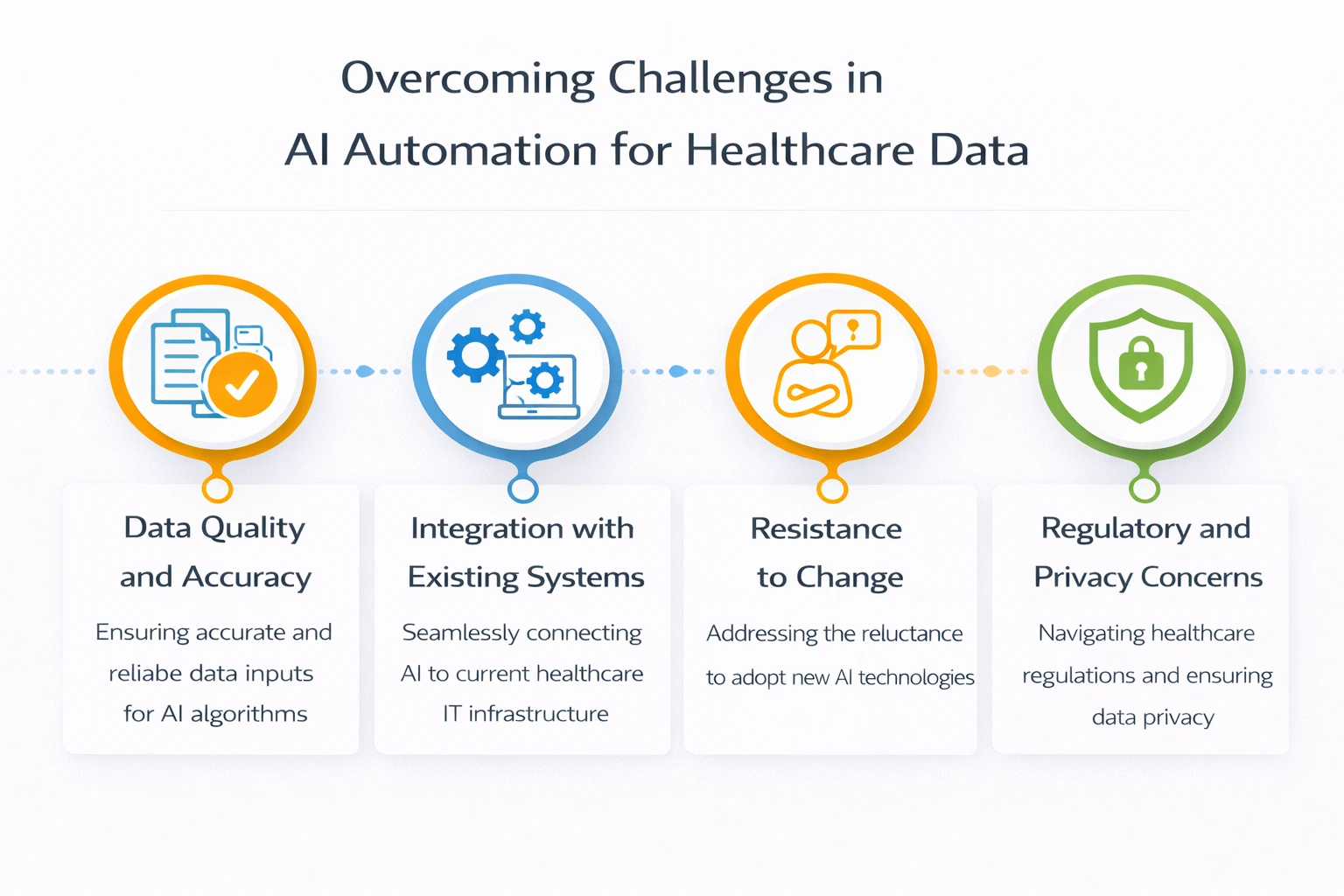
Data Quality and Accuracy
The AI models need access to accurate data that meets high standards of quality. AI solutions depend on accurate data to function properly, but any inconsistent information will lead to incorrect results and wrong decisions. Healthcare organizations must establish proper data governance norms through their process for determining data quality.
Integration with Existing Systems
Healthcare data interoperability systems that use AI technology need to connect with existing legacy systems, which do not have compatibility with upcoming technological advancements. The process of integration requires both time and complex procedures, which necessitate organizations to allocate substantial resources and infrastructure funding.
Resistance to Change
The healthcare industry has resistance against new technology adoption, which results from its need to modify existing operational processes. The successful implementation of AI-powered interoperability solutions requires organizations to use change management strategies, which include effective training programs.
Regulatory and Privacy Concerns
Healthcare organizations must comply with HIPAA and GDPR because their data handles sensitive information. The AI systems must fulfill privacy regulations through their secure data processing operations.
Why Interoperability Matters in Healthcare Today
Interoperability is a valuable part of modern healthcare. The capability to share patient data across different systems and enterprises guarantees that result-driven healthcare providers have full-spectrum access to a patient’s medical history, which is crucial for delivering quality care and comprehensive outcomes. It also allows healthcare professionals to make informed decisions based on incomplete information without interoperability, leading to poor outcomes.
Thus, AI-enabled data interoperability in healthcare also enables healthcare chains to successfully optimize operational workflows, reduce task redundancy, and enhance patient safety. AI is making the healthcare system more efficient, responsive, and patient-centered by making it easier for people to talk to each other and share information.
Types of Healthcare Data Interoperability
There are multiple types of healthcare data interoperability, each having a unique purpose:
Foundational Interoperability
The system permits data transmission between different systems. The system does not provide the capability to understand transmitted information. It’s the most basic level of interoperability.
Structural Interoperability
This standardizes the data structure, which enables the receiving system to comprehend the information. For example, healthcare providers follow strict guidelines to store medical records through the use of common HL7 and FHIR formats.
Semantic Interoperability
The highest level of interoperability operates at this level because it enables different systems to share their data understanding. The two systems need to understand the meaning of each field when they share patient data. The field definitions include terms like “blood pressure” and “medication dosage.”
Automate Your Healthcare Workflows with AI
Over the past few years, AI has proved its capability to transform healthcare through its ultimate power to build data integration solutions for clinical data integration. Therefore, the success of these efforts will improve the ability to share healthcare data b/w different systems. By effectively streamlining routine workflows, healthcare enterprises can improve core efficiency, reduce errors, and allow clinicians to focus on providing better patient care. Thus, AI-driven automation can help in streamlining processes such as patient data entry, claim processing, and even the administration of treatment protocols.
Applying automation driven by AI can therefore enhance decision-making by giving medical professionals access to real-time data insights. AI can look at a patient’s medical history and clinical data to guess what will happen to their health in the future or recommend the best treatments that are right for them. These core abilities are super-essential for improving both patient outcomes and operational efficiency.
Conclusion: Transforming Healthcare with AI Data Interoperability
Undoubtedly, AI-powered automation is revolutionizing the entire landscape of healthcare data interoperability. By improving the data exchange across systems, AI ensures that healthcare professionals have ultimate access to deliver accurate, real-time information when they need it most. However, this improvement enhances the overall quality of patient care, streamlines operations, reduces costs, and, more importantly, boosts patient safety and efficiency.
The adoption of AI systems throughout the industry enables the healthcare field to achieve better data sharing and automated work processes. Healthcare organizations achieve their goal of continuous data connection through the effective implementation of their chosen strategies and operational tools, which also enhance interdepartmental cooperation and result in better patient treatment.
For more details, you can navigate to Esferasoft Solutions to get 100% genuine assistance for implementing AI in Healthcare Data Integration.
FAQ’S
What is AI automation in healthcare?
AI automation in healthcare uses artificial intelligence to perform repetitive tasks without human intervention, such as processing medical records, scheduling appointments, analyzing imaging, predicting patient risks, developing personalized treatment plans, and managing admin workflows.
How will AI be used in healthcare?
AI will assist with diagnostics, personalized treatment plans, drug discovery, robotic surgery, predictive analytics for disease outbreaks, virtual health assistants, automated billing, and real-time patient monitoring.
What is the main goal of data interoperability in healthcare?
The primary objective of data interoperability in healthcare is to establish medical information access for all healthcare professionals who require it through continuous data sharing between various healthcare platforms and systems.
What are the four layers of interoperability in healthcare?
The healthcare system contains four interoperability layers, which include basic data sharing, standardized data format/structure, and shared data understanding and organizational governance with its policies and workflows.
What does interoperability mean for the healthcare AI system?
Interoperability functions as a data access tool that enables healthcare AI systems to share information with various systems while they process and comprehend data to produce an all-encompassing understanding of different healthcare networks.
What is an example of data interoperability in healthcare?
The hospital EHR system automatically receives patient lab results from one hospital, whereas the pharmacy system obtains prescription information from multiple healthcare providers.
How does AI improve data interoperability in healthcare?
AI technology enables healthcare professionals to utilize various data formats by translating them into usable formats, creating mappings between different terminologies, and completing missing records. details, transforming unstructured data into standardized formats, and detecting similarities between incompatible systems.
What are the benefits of AI automation for healthcare data interoperability?
AI technology brings advantages for healthcare data interoperability by accelerating data connections, reducing human errors, and providing complete patient information, which enables better medical decisions, improved patient care management, lower operational costs, and enhanced scientific research efforts.
What challenges exist in implementing AI automation for healthcare data interoperability?
The challenges of using AI automation for healthcare data interoperability stem from several factors, which include system components that require replacement, data protection requirements, the absence of established guidelines, the expensive costs of system implementation, the complex process of conforming to regulations, and the presence of data quality problems, plus organizational resistance to change.
How can healthcare organizations overcome the barriers to AI-powered data interoperability?
Healthcare organizations should establish operational capacity by adopting industry standards, such as FHIR, investing in modern infrastructure, implementing strong data governance, prioritizing cybersecurity, training staff, initiating pilot projects, collaborating across organizations, and ensuring regulatory compliance from the outset.